GPS Location Verification: How Geolocation Challenges Work
Geolocation challenges transform any physical space — a park, a city, an office — into a game board. But how does it actually work?
The participant's perspective
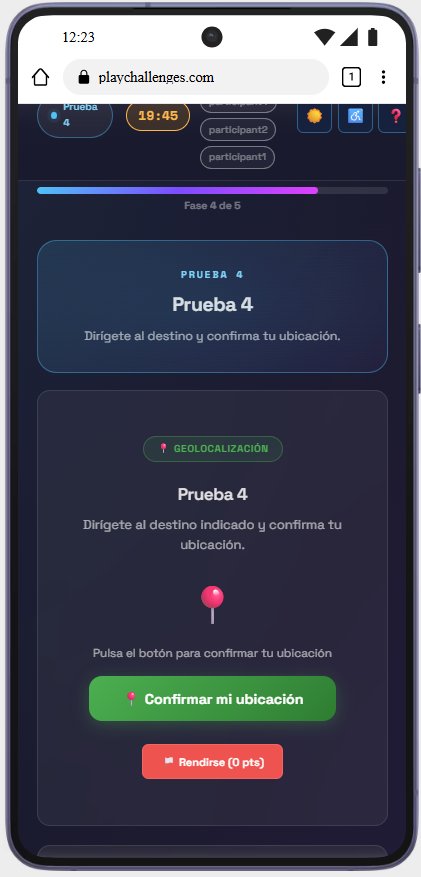
The participant reaches a "Geolocation" challenge and sees: "Head to the indicated destination and confirm your location." They receive a clue guiding them to the spot. When they believe they've arrived, they tap "Confirm my location."
Server-side verification
The server compares the participant's position with the target coordinates the organizer configured. If the distance is within the tolerance radius (configurable, typically 20-50 meters), the challenge is marked complete and the next one unlocks.
Privacy and security
Verification is point-in-time, not continuous. The system only accesses location at the exact moment the button is tapped.
Use cases
Urban scavenger hunt. 10 points scattered through the old town. Educational route. Students visit historical points where AI tells them the story. Office team building. Points across different floors. Outdoor event. A park with secret checkpoints.
Tips for organizers
Check each point physically. Adjust the radius (20m in urban areas, 50m in open spaces). Consider accessibility. And most importantly: combine with digital challenges — the magic is what happens after verifying the location.
Ready to create your first geolocation challenge? Start free at PlayChallenges and turn any space into a game board.